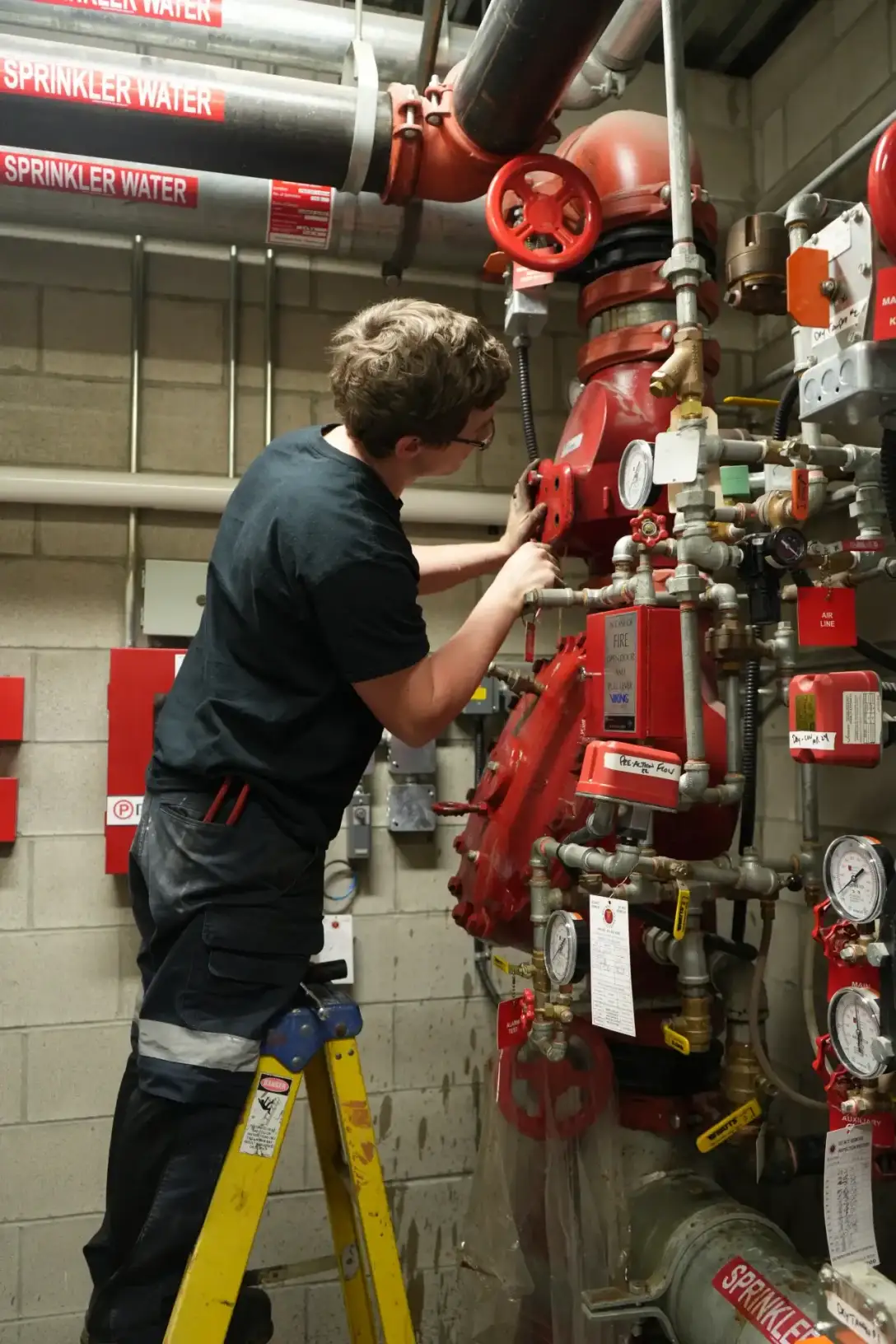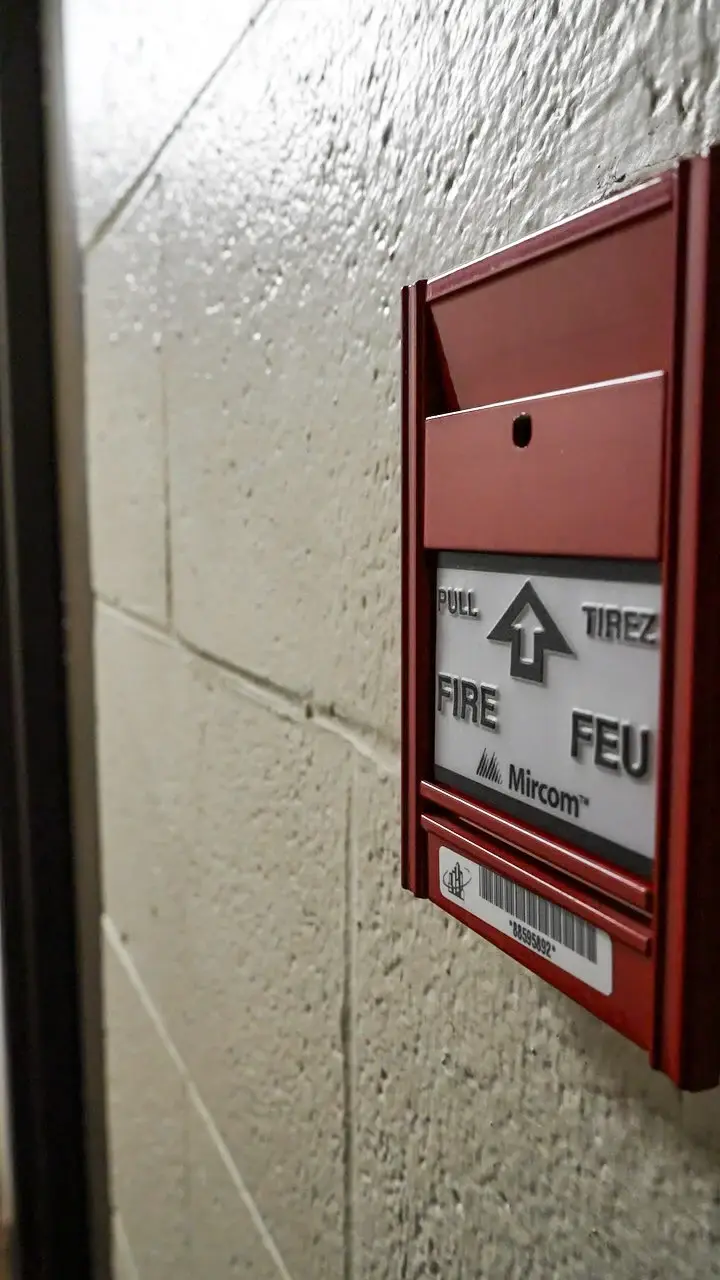

In Ontario, a building’s fire alarm system is governed by the Ontario Fire Code (O. Reg. 388/97), Division B, Section 6.3. The Code requires the owner to keep the system in operating condition, check it daily for trouble signals, test it monthly, and have it inspected and tested once a year to CAN/ULC-S536. Records of every check, test and repair are kept for two years. The standard for that annual test is CAN/ULC-S536:2019, not an American code.
Which rules actually apply to your building?
Okay, so first things first. Three documents decide what you owe on a fire alarm system, and they do different jobs.
The Ontario Building Code decides whether your building needs a fire alarm at all, and whether it needs to be monitored. That was settled when the building was designed or last renovated. The Ontario Fire Code decides how the system is maintained for the life of the building. CAN/ULC-S536 is the standard the Fire Code points to for how the inspection and test are done.
So what that means is: the Building Code put the system in, the Fire Code keeps it working, and S536 is the checklist the technician follows. If a contractor quotes you “NFPA 72” for an Ontario fire alarm inspection, ask why. NFPA 72 is the American standard. Ontario work is done to CAN/ULC.
What does the Ontario Fire Code require, and how often?
The Code sets three clocks on a fire alarm system. The reason being, each one catches a different kind of failure.
| Frequency | What is required | Who can do it | Where it comes from |
|---|---|---|---|
| Daily | Look at the panel. Confirm it shows normal, with no trouble or supervisory signal. | Building staff or superintendent | Ontario Fire Code, Division B, Section 6.3 |
| Monthly | Test the system to confirm it operates (a test of the alarm from one initiating point, with the monitoring station notified first). | Building staff who have been shown how, or the contractor | Ontario Fire Code, Division B, Section 6.3 |
| Annually | Full inspection and test of the entire system, device by device, to CAN/ULC-S536:2019, with a signed report. | A technician qualified to CAN/ULC-S536 | Ontario Fire Code, Division B, Section 6.3, referencing CAN/ULC-S536 |
| After any change | Verification to CAN/ULC-S537:2019 when the system is installed, extended or modified. | A technician qualified to CAN/ULC-S537 | Ontario Building Code and Fire Code |
The daily check takes ten seconds and catches a trouble condition before it becomes a disabled system. The monthly test proves the panel still does something when a device trips. The annual test is the one that finds the detector that quietly died in month four.
What does an annual CAN/ULC-S536 inspection include?
In a nutshell, every part of the system gets touched. The technician tests each smoke detector, heat detector, pull station, flow switch and supervisory switch. Every horn, bell and strobe is operated. The panel, batteries and power supply are checked, and the signal to the monitoring station is confirmed where one is required.
The output is a report that lists every device by location and result. A one-page certificate with a stamp on it is not an S536 report. If your file holds certificates and no device lists, that is the gap to close first. The full device-by-device breakdown is in our fire alarm inspection requirements guide.
What records does the Fire Code say you have to keep?
The Fire Code requires records of every test, inspection and corrective measure, kept for two years and available to the fire department on request (Division C, Section 1.1.2). Windsor Fire & Rescue Services asks to see two years of documents on site during a business licence inspection.
Here is what I would keep in the binder, or in your online portal if your contractor gives you one:
- The last two annual S536 reports, with device lists.
- The monthly test log, signed and dated, with the monitoring station confirmation.
- Every deficiency notice and the repair invoice that closed it.
As opposed to a stack of invoices with “fire alarm annual” on them, which proves you paid for something and nothing else.
What happens when the fire department finds a problem?
A fire prevention officer who finds the system out of compliance can issue an inspection order under the Fire Protection and Prevention Act, 1997, with a date to correct it. Miss the date and the file can go to court, where fines on conviction can reach $50,000 for an individual and $100,000 for a corporation. The court decides that, not the officer, and in my experience the officer would much rather see a plan and a date than write the order.
The more common cost is the one nobody budgets for. A system found out of service means a fire watch, around the clock, until it is back. That bill runs by the hour and starts the same day.
Does this change for apartment buildings, plants or small commercial?
The daily, monthly and annual rule is the same for every building that has a fire alarm. What changes is the size of the job and what sits around it.
An apartment building adds in-suite smoke alarms and, in many buildings, a voice communication system that is tested with the fire alarm. A manufacturing plant adds supervisory switches on sprinkler valves and often a flow switch tied into the panel. So the fire alarm and sprinkler inspections should be done together, or the panel gets tested twice. A small commercial unit with a conventional panel and twelve devices is a short visit, but the report still lists all twelve.
Frequently asked questions
What are the fire alarm testing requirements in Ontario?
The Ontario Fire Code requires a daily check of the panel for trouble signals, a monthly operational test, and an annual inspection and test of the full system to CAN/ULC-S536:2019 by a qualified technician. Any new installation or modification is verified to CAN/ULC-S537:2019.
Does a commercial building in Ontario need a fire alarm?
The Ontario Building Code decides that, based on occupancy, size and height. If your building has one, the Fire Code requires it to be maintained in operating condition whether or not it was originally required.
Who can do the annual fire alarm inspection?
A technician trained and qualified to CAN/ULC-S536. In Ontario the industry standard is a certified fire alarm technician, and the report is signed by that person. Building staff can do the daily check and, with instruction, the monthly test, but not the annual.
Is NFPA 72 used in Ontario?
No. NFPA 72 is the American fire alarm code. Ontario fire alarm installation, verification and inspection are done to the CAN/ULC standards (S524, S537 and S536). A quote that cites NFPA 72 for an Ontario annual inspection is citing the wrong document.
How long do fire alarm records have to be kept?
Two years, available on site, under the Ontario Fire Code. Many owners keep longer, because an insurer or a buyer in a sale will ask for history.
“My contractor handles all of that”
Maybe. The way to know is to open the last report. If it lists every device in the building with a result beside it, you are fine, and you should ask for the monthly log next. If it is a certificate with a stamp, or an invoice, nobody can say what was tested.
Red Seal’s fire alarm reports are device-by-device to CAN/ULC-S536:2019, delivered within 24 hours of the visit and guaranteed within 48 hours or 20% comes off the inspection price. Every report and deficiency lives in your online portal, so the two-year file builds itself.
Get your building’s fire alarm file checked against the Code. Send your building address to Red Seal and get a fixed-fee inspection quote within 24 hours. Get a fixed-fee quote or call 548-888-FIRE (3473).
Red Seal Fire Protection inspects, tests and repairs fire sprinkler, fire alarm, fire extinguisher, fire pump and backflow systems for commercial, industrial and multi-residential buildings in Windsor-Essex, Chatham-Kent, Sarnia-Lambton and London, Ontario.