How often a commercial building needs a fire inspection in Ontario depends on the system, and the Ontario Fire Code (O. Reg. 388/97) sets each schedule. Fire alarms get a daily check, a monthly test and an annual inspection under CAN/ULC-S536:2019. Sprinklers, standpipes and fire pumps follow NFPA 25, which sets weekly, monthly, quarterly, semi-annual and annual items. Extinguishers get a monthly visual check and annual maintenance under NFPA 10. Emergency lighting is tested monthly and for its full rated duration once a year. The owner is responsible for all of it, and records stay on site for two years.
Which fire inspections are required every year in Ontario?
Okay, so first things first. Every fire protection system in the building gets a full inspection and test once a year. That is the floor, not the whole job.
The reason being that Division B, Part 6 of the Ontario Fire Code adopts a different standard for each system. Each standard carries its own list of shorter checks on top of the annual one.
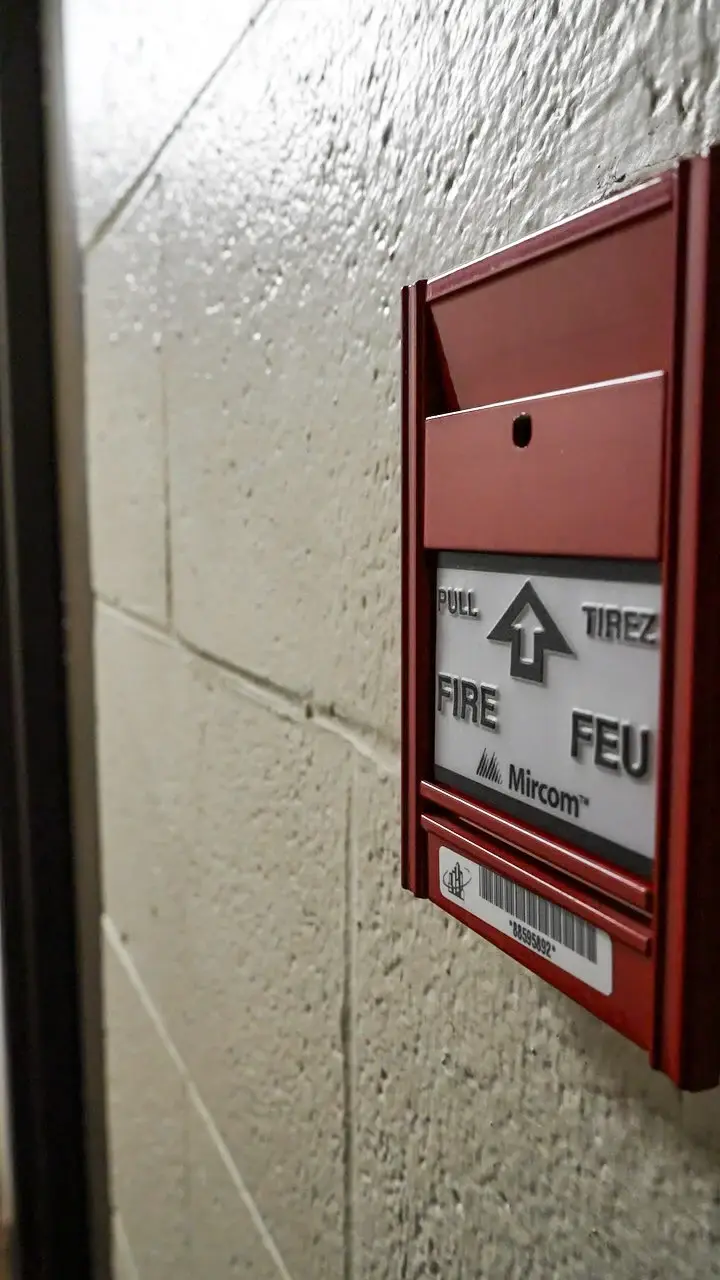
Here is the annual list for a typical commercial building. The fire alarm gets an inspection and test of every detector, pull station and signal under CAN/ULC-S536:2019 (Division B Section 6.3). Sprinklers, standpipes, fire pumps and backflow preventers get their annual items under NFPA 25 (Division B Section 6.4).
Extinguishers get annual maintenance by a trained person under NFPA 10 (Division B Section 6.2). Emergency lighting gets a test for its full rated duration (Division B Section 2.7.3). A fire safety plan, where the building needs one, is kept current under Division B Section 2.8.
So the annual inspection is one day on the calendar. The rest of the schedule is what most buildings miss.
What has to be checked monthly, and can my own staff do it?
The big thing is this: most of the monthly items do not need a technician. The code wants them done and written down.
Take the fire alarm. Division B Section 6.3 asks for a daily check that the panel shows no trouble, and a monthly test. Extinguishers get a monthly visual check under NFPA 10, and NFPA 10 is fine with your own staff doing it.
Emergency lighting gets a monthly test for operation under Division B Section 2.7.3. On the sprinkler side, NFPA 25 asks for a monthly look at the gauges (13.2.7.1.1), the locked or supervised control valves (13.3.2.1.1) and the outside of the alarm valve (13.4.1.1). Windsor Fire & Rescue Services also lists monthly fire separation door checks for business licence holders in Windsor-Essex.
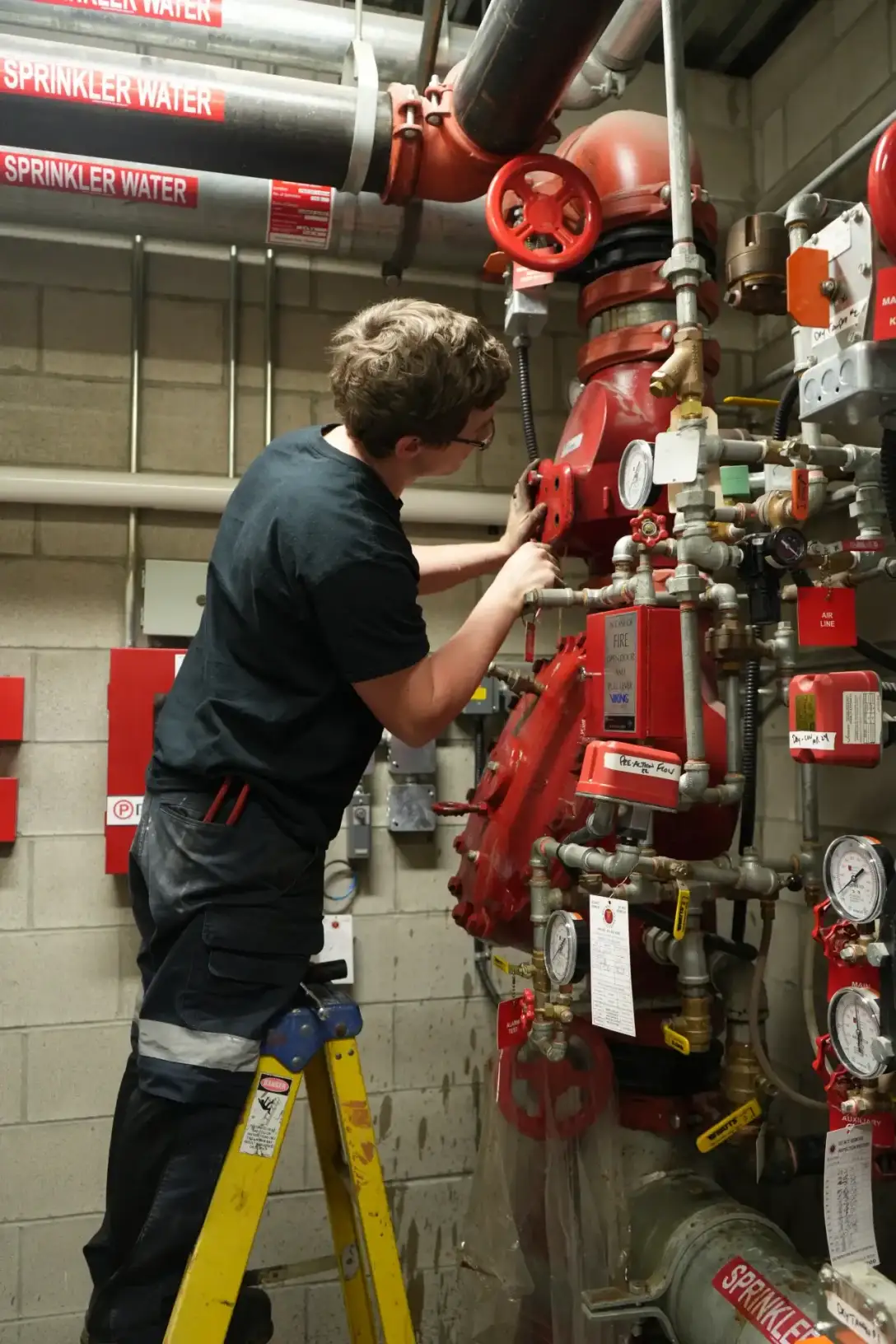
A plant manager in Tecumseh has his maintenance lead walk the valve room on the first Monday of every month. It takes him about 20 minutes. He photographs every gauge and every valve handle, and the photos go in the binder with the date.
That is as opposed to finding out at the annual visit that a gauge has read zero since March, with no way to prove when it happened. Have your technician walk the route with your staff once, so they know what open and normal look like.
So the monthly items can be yours if you want them. Write them down either way, because an inspection with no record did not happen.
What fire inspection frequency does Ontario require for sprinklers, fire pumps and standpipes?
One thing to know: NFPA 25 has the longest list of any standard in the building, because water-based systems have the most moving parts. Here is the full Ontario fire inspection frequency, system by system, with the standard that sets each one.
| Frequency | Sprinklers, standpipes, pumps, backflow (NFPA 25, Fire Code 6.4) | Fire alarm (CAN/ULC-S536:2019, Fire Code 6.3) | Extinguishers (NFPA 10, Fire Code 6.2) | Emergency lighting (Fire Code 2.7.3) |
|---|---|---|---|---|
| Daily | None | Check that the panel shows no trouble | None | None |
| Weekly | Diesel fire pump churn test, run at least 30 minutes (8.3.1.1.1, 8.3.2.4); sealed control valves (13.3.2.1) | None | None | None |
| Monthly | Gauges (13.2.7.1.1); locked or supervised valves (13.3.2.1.1); alarm valve exterior (13.4.1.1); electric fire pump churn test | Monthly test | Visual check, building staff may do it | Test for operation |
| Quarterly | Waterflow and supervisory alarms (5.2.4, 13.2.8.1); mechanical waterflow test (13.2.6.1.2); fire department connection (13.8.1); hose valves (13.6.1) | None | None | None |
| Semi-annual | Vane and pressure waterflow test (13.2.6.2.2); valve supervisory switch test (13.3.2.1.3) | None | None | None |
| Annual | Sprinklers, pipe, hangers and signs (5.2.1 to 5.2.5); main drain test (13.2.5); control valve operation (13.3.3.1); fire pump flow test (8.3.3); backflow forward-flow test (13.7.2.1); standpipe and hose (6.2.3 to 6.2.8); hydrants (7.2.2.4, 7.3.2) | Full inspection and test of every detector, pull station and signal | Maintenance by a trained person | Test for the full rated duration |
| Every 5 years and longer | Internal pipe assessment (14.2.1); gauges replaced or calibrated (13.2.7.2); standpipe flow and hydrostatic tests (6.3.1, 6.3.2); underground flow (7.3.1); sprinkler sampling by type and age (5.3.1) | None set by frequency | 6-year internal maintenance and 12-year hydrostatic test for stored-pressure dry chemical | None |
Dry pipe systems add their own items under NFPA 25, 13.4.5. Those are a weekly enclosure check in heating season, quarterly priming water and accelerator checks, an annual trip test and a full-flow trip test every 3 years. Our post on quarterly wet sprinkler system inspections walks through the 90-day items in detail.
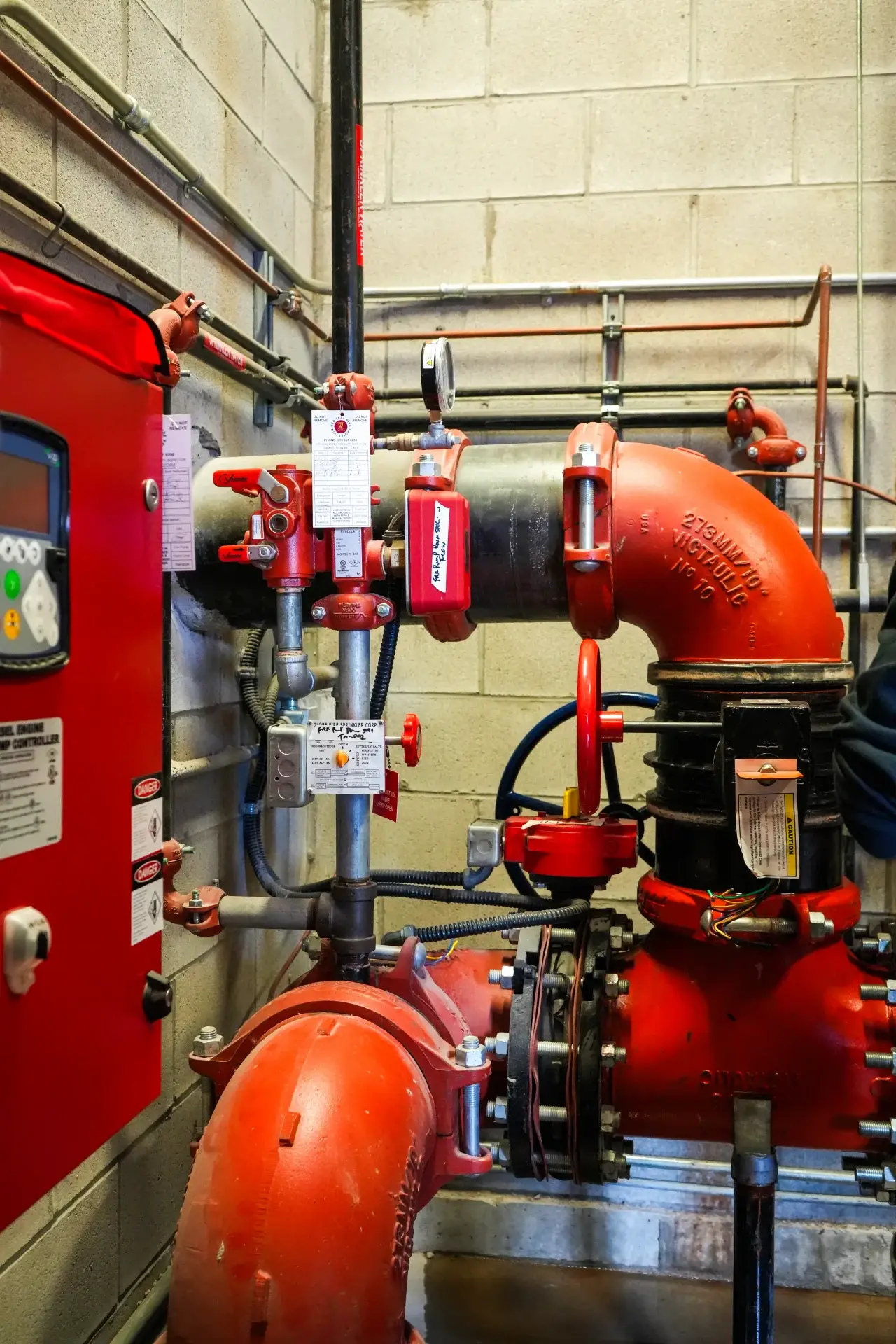
I have stood in a pump room where the diesel had not been started in 4 months and the batteries were flat. The owner had a clean annual report from the year before and thought that covered it. The weekly run is a 30-minute item, and it is the one that tells you the pump will start on the day it matters.
So read the table by row, not by column. Every row is a date the building owes, as opposed to a menu you pick from.
Who is responsible for keeping to the schedule, and what records prove it?
The owner, every time. Division C Section 1.2 of the Ontario Fire Code puts compliance on the owner, and NFPA 25 says the same for water-based systems in 4.1.1. A lease can hand some of the work to a tenant, but the owner stays responsible to the fire department, as we cover in who is responsible for fire inspections, landlord or tenant.
Division C Section 1.1.2 requires records of tests, inspections and corrective measures to be kept for two years. Windsor Fire & Rescue Services confirms it wants those two years on site.
So what that means is a fire prevention officer is entitled to ask for 24 months of monthly extinguisher checks, as well as the annual certificate. The fire alarm log fills fastest, and our fire alarm maintenance guide for property managers shows a simple one to keep by the panel.
How does a property manager keep all of these dates straight?
Honest answer: with a calendar somebody else owns. A 12-month service agreement puts every frequency on a schedule, auto-renews, and comes with 30 days’ notice of any rate change at renewal. The technician shows up on the quarterly date without anyone in your office having to remember it.
I have tried running this off a whiteboard. The whiteboard lost. Every Red Seal customer gets an online inspection portal with every past report and deficiency resolution, so the two-year record is there when the fire department or your insurer asks.
The Fire Code Compliance Blueprint Inspection goes one step further. It is one fixed price per building for every system in it, quoted within 24 hours of the address.
It includes a 12-month compliance calendar with every weekly, monthly, quarterly and annual item on it. So you know the schedule before the first visit, as opposed to learning it one missed item at a time.
Frequently asked questions
How often is a fire inspection required in Ontario for a small commercial building?
The same frequencies apply whether the building is 2,000 square feet or 200,000. Under the Ontario Fire Code, the fire alarm gets a daily check, a monthly test and an annual inspection to CAN/ULC-S536:2019. Extinguishers get a monthly check and annual maintenance under NFPA 10, and emergency lighting is tested monthly and annually. If the building has sprinklers, NFPA 25 adds quarterly, semi-annual and annual items.
What are the annual fire inspection requirements for a fire alarm in Ontario?
Once a year, every detector, pull station and signal on the system is inspected and tested to CAN/ULC-S536:2019, which the Ontario Fire Code adopts in Division B Section 6.3. The panel, the batteries and the connection to the monitoring station are tested at the same time. The technician signs a report that lists each item and its result.
Does the fire department do my annual fire inspection?
No. The fire department inspects for compliance with the Ontario Fire Code and is entitled to ask for your records. The inspection and testing of each system is done by a contractor or, for some monthly items, by your own staff. In Windsor, Windsor Fire & Rescue Services reviews those records as part of the business licence process.
Can one contractor cover every fire inspection frequency in Ontario?
Yes, if they hold the trades for each system. Sprinkler work in Ontario is done by a licensed sprinkler fitter, and fire alarm inspection and testing by certified fire alarm technicians. Red Seal does all of them under one report and one portal, and our fire system inspections page lists each system we cover.
Does one annual visit really cover it?
It does not, and the standards say so in writing. The Ontario Fire Code and CAN/ULC-S536:2019 set the daily and monthly fire alarm checks, and NFPA 25 sets the weekly pump run, the quarterly waterflow test and the semi-annual valve test. An annual-only report cannot show any of them, and after 3,000+ inspections in the last few years the pattern is a tidy certificate on the wall and a two-year record that stops at page one.
Get your building’s full schedule on one page. Send your building address to Red Seal and get a fixed-fee inspection quote within 24 hours. Get a fixed-fee quote or call 548-888-FIRE (3473).
Red Seal Fire Protection inspects, tests and repairs fire sprinkler, fire alarm, fire extinguisher, fire pump and backflow systems for commercial, industrial and multi-residential buildings in Windsor-Essex, Chatham-Kent, Sarnia-Lambton and London, Ontario.